Tourist attractions--archive--
-

Tsukiji Honganji Temple (Chuo Ward, Tokyo).
Overview (History, Features, and Attractions) Tsukiji Honganji is a Jodo Shinshu Honganji sect (Nishi Honganji branch) temple located in Tsukiji, Chuo Ward, Tokyo. With a long history dating back to the Edo period, the current temple complex was built as part of the reconstruction project following the Great Kanto Earthquake of 1923, and was designed by architect Chuta Ito. -
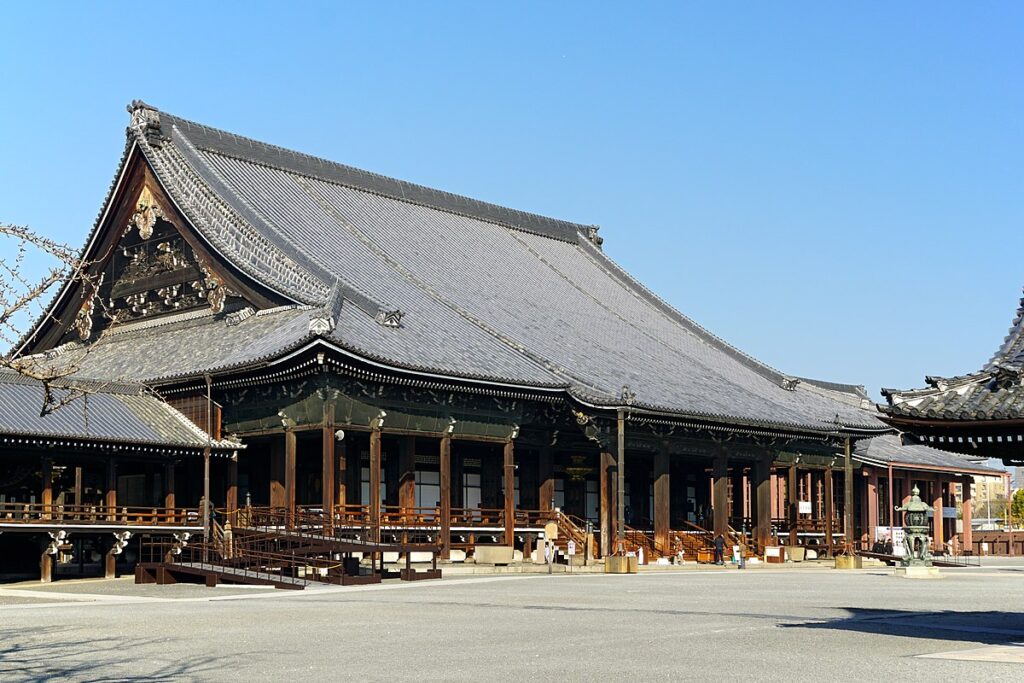
Nishi Honganji Temple (Shimogyo Ward, Kyoto City, Kyoto Prefecture)
Nishi Honganji Temple (Shimogyo Ward, Kyoto City, Kyoto Prefecture) — Overview (History, Features, and Attractions) Nishi Honganji Temple is one of the head temples of the Jodo Shinshu Honganji sect and is a large temple located in Shimogyo Ward, Kyoto City. Its origins date back to Shinran (the founder of Jodo Shinshu), and during the Muromachi and Sengoku periods, the temple gained many followers thanks to the efforts of Rennyo and others... -
Hachiko Statue (Shibuya Ward, Tokyo)
Title: Hachiko Statue (Shibuya Ward, Tokyo) Overview (History, Features, and Appeal): Hachiko was an Akita dog kept in Shibuya, Tokyo, in the 1920s. He is known for waiting every day at Shibuya Station for his master, Professor Eizaburo Ueno (Tokyo Imperial University). Even after Professor Ueno's sudden death in 1925, Hachiko continued to live there. -
Kumano Nachi Taisha Shrine (Nachikatsuura Town, Higashimuro District, Wakayama Prefecture)
Kumano Nachi Taisha Shrine (Nachikatsuura Town, Higashimuro District, Wakayama Prefecture) Overview (History, Features, and Attractions) Kumano Nachi Taisha Shrine is one of the Kumano Sanzan (Kumano Hongu Taisha, Kumano Hayatama Taisha, and Kumano Nachi Taisha) shrines, and has been revered since ancient times as one of the centers of Kumano faith. Its sacred object is Nachi Falls (approximately 133 meters high). -
Mitsui Outlet Park Jazz Dream Nagashima (Nagashima-cho, Kuwana City, Mie Prefecture)
Mitsui Outlet Park Jazz Dream Nagashima (Nagashima-cho, Kuwana City, Mie Prefecture) Overview (History, Features, and Attractions) Mitsui Outlet Park Jazz Dream Nagashima is a large outlet mall located in Nagashima-cho, Kuwana City, Mie Prefecture. It is close to the resort area of Nagashima Onsen and the amusement park "Nagashima Spa Land"... -
Mount Sanbe (Oda City, Shimane Prefecture)
Overview (History, Features, and Attractions) Mount Sanbe is a volcanic mountain range towering over the center of Oda City, Shimane Prefecture. It is an independent peak consisting of multiple peaks that form an outer rim. Formed by volcanic activity from the Jomon to Pleistocene periods, it is characterized by a gentle mountain landscape with no active eruptions currently observed. -
Awashima (Awashimaura Village, Iwafune District, Niigata Prefecture)
Overview (History, Features, and Attractions) Awashima (officially Awashimaura Village, Iwafune District, Niigata Prefecture) is a small, remote island in the Sea of Japan, known for its abundant nature and tranquil island life. Since ancient times, the island has served as a hub for fishing and maritime transportation, and the island boasts a settlement, a shrine, and facilities that preserve local history... -
Mount Norikura (Matsumoto City, Nagano Prefecture)
Overview (History, Features, and Attractions) Mount Norikura is a mountain range with an elevation of approximately 3,026 meters located on the border between Matsumoto City, Nagano Prefecture, and Takayama City, Gifu Prefecture. It is known as part of the Hida Mountain Range (Northern Alps). It is made up of multiple peaks and a plateau (Norikura Plateau) formed by volcanic activity, and the area near the summit is characterized by volcanic topography and... -
Metasequoia Avenue (Takashima City, Shiga Prefecture)
Overview (History, Features, and Attractions) The Metasequoia Avenue (Makino Metasequoia Avenue) is a tree-lined avenue along the northwest shore of Lake Biwa in Makino Town, Takashima City, Shiga Prefecture. Metasequoia (English name: dawn redwood) is a gymnosperm rediscovered in China before the war and has been planted throughout Japan as roadside trees and windbreaks. -
Nagasaki Peace Park (Nagasaki City, Nagasaki Prefecture)
Overview (History, Features, and Attractions) Nagasaki Peace Park (Nagasaki City, Nagasaki Prefecture) is a park dedicated to remembrance and peace, established in the Urakami area, which was devastated by the Nagasaki atomic bombing on August 9, 1945. It was developed as a place for postwar reconstruction, floral tributes, and memorials, and in 1955 (the 30s of the Showa era), the Peace Statue (Kitamura...