Tourist attractions--archive--
-

Clouds Above the Hill Museum (Matsuyama City, Ehime Prefecture)
Overview (History, Features, and Attractions) The Saka no Ue no Kumo Museum is a museum that offers an easy-to-understand look at the history of Meiji Japan, focusing on the world of Ryotaro Shiba's novel "Saka no Ue no Kumo" and the Meiji-era figures from Matsuyama (Akiyama Yoshifuru, Akiyama Saneyuki, and Masaoka Shiki). Opened in the Heisei era,... -
Meguro Sky Garden (Meguro Ward, Tokyo)
Thank you for your request. We can create your article in HTML format, which can be copied and pasted directly into WordPress (Gutenberg). However, since the latest details (routes, travel times, etc.) such as the nearest station and transportation may change, we recommend that you check the official information before publishing. How to proceed... -
Kyocera Dome Osaka (Nishi-ku, Osaka City, Osaka Prefecture)
Overview (History, Features, and Attractions) Kyocera Dome Osaka is an indoor multi-purpose dome stadium located in Nishi Ward, Osaka City. Completed in the 1990s, it originally opened as the "Osaka Dome." In 2006, Kyocera acquired the naming rights, giving it its current name. It is a stadium that is popular with professional baseball players (Oric... -
Mishaka Pond (Chino City, Nagano Prefecture)
Mishaka Pond (Misha-kai-ike) / Chino City, Nagano Prefecture - Overview (History, Features, and Attractions) Mishaka Pond is a small reservoir located in Kitayama (Tateshina region) of Chino City, Nagano Prefecture. It is known for the scenery of the surrounding trees reflected in its tranquil, mirror-like surface. Originally an artificial pond built for agricultural purposes... -
Former Nakagomi School (Saku City, Nagano Prefecture)
Overview (History, Features, and Attractions) The former Nakagomi School is a historic school building remaining in the Nakagomi district of Saku City, Nagano Prefecture. Built in the Meiji period, the Western-style school building remains well preserved, with an attractive exterior that combines wooden construction with Western design, and an interior that conveys the atmosphere of classrooms from that time. -
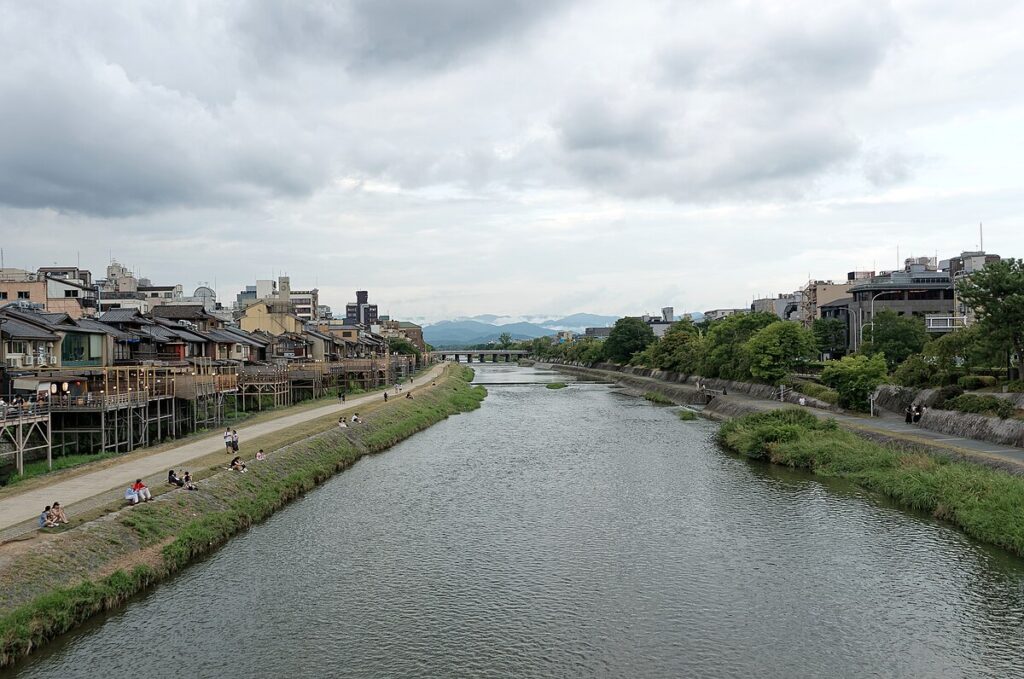
Kamo River (Kyoto City, Kyoto Prefecture)
Overview (History, Features, and Attractions) The Kamo River is a representative river that flows north and south through Kyoto City, and its landscape has been closely linked to Kyoto life and culture since ancient times. Since the Heian period, it has frequently appeared in poetry and stories as a waterfront that brought vitality to the capital, and people have enjoyed sitting on the riverbanks... -
Tokyo Racecourse (Fuchu City, Tokyo)
Overview (History, Features, and Attractions) Tokyo Racecourse (Fuchu City, Tokyo) is one of Japan's leading racecourses, managed by the Japan Racing Association (JRA), which manages Japan Central Horse Racing. With a long history and tradition, it has hosted major domestic races, including the Japanese Derby, the Autumn Tenno Sho, the Japan Cup, and the Yasuda Kinen. -
Kanazawa Bunko (Kanazawa Ward, Yokohama City, Kanagawa Prefecture)
Overview (History, Features, and Appeal) Kanazawa Bunko is a collective name for a historical museum and library located in Kanazawa Ward, Yokohama City, Kanagawa Prefecture. It originated as a private school and library established by Hojo Sanetoki, a member of the Hojo clan, during the Kamakura period (late 13th century). Since the Middle Ages, it has served as a center of academic... -
Bitchu Kokubunji Temple (Soja City, Okayama Prefecture)
Overview (History, Features, and Attractions) Bitchu Kokubunji Temple is one of the ancient provincial temples built for each province, and is located in what is now Soja City, Okayama Prefecture. The temple's origins date back to the Nara period (during the Tenpyo era, in 741, Emperor Shomu ordered the construction of provincial temples for each province). -
Takabocchi Plateau (Shiojiri City, Nagano Prefecture).
Overview (History, Features, and Attractions) Takabocchi Plateau is a highland area in Shiojiri City, Nagano Prefecture, known as a viewing spot offering a spectacular 360-degree panoramic view. From the high ground, visitors can enjoy sweeping views of the Northern, Central, and Southern Alps, and on clear days, they can even see Mount Fuji and Matsumoto in the distance.