Tourist attractions--archive--
-

Mitsui Greenland (Arao City, Kumamoto Prefecture)
Overview (History, Features, and Attractions) Mitsui Greenland is a large amusement park located in Arao City, Kumamoto Prefecture. Long a popular local leisure spot, it features a wide variety of attractions, from thrilling rides to family-friendly attractions. Seasonal events (summer pool, winter...). -
Tagonoura (Fuji City, Shizuoka Prefecture)
Overview (History, Features, and Attractions) Tagonoura is a coastal and harbor area facing Suruga Bay in Fuji City, Shizuoka Prefecture. It is a scenic spot that has long been the subject of utamakura and waka poetry, and is even featured in the Manyoshu poem: "When I step out into Tagonoura, I see snow falling on the white, high peaks of Mount Fuji.". -
Kawanakajima Battlefield (Nagano City, Nagano Prefecture)
Kawanakajima Battlefield (Nagano City, Nagano Prefecture) Overview (History, Features, Attractions) The Kawanakajima Battlefield is a historic site that marks the site of the Battle of Kawanakajima, a fierce battle between Uesugi Kenshin and Takeda Shingen during the Sengoku period. The fourth battle in 1561 is particularly famous, and the tactics and deeds of the two heroes have been passed down through the generations. Currently, the site is in the Hachi... -
Honen-in Temple (Sakyo Ward, Kyoto City, Kyoto Prefecture).
Overview (History, Features, and Attractions) Honen-in Temple is a Jodo sect temple located in Sakyo Ward, Kyoto City. It is a tranquil temple associated with Honen Shonin, the founder of Pure Land Buddhism. The temple grounds, surrounded by trees in the mountains, offer a calm atmosphere that helps you forget the hustle and bustle of the city... -
Nomizo Falls (Kimitsu City, Chiba Prefecture)
Overview (History, Features, and Attractions) Nomizonotaki Falls is a small waterfall and valley spot located in Kimitsu City, Chiba Prefecture. It is often introduced together with the nearby Kameiwa Cave, and the "heart-shaped beam of light" created by the morning sun reflecting between the rocks has become a hot topic on social media, quickly becoming a popular tourist attraction. -
Manpukuji Temple (Uji City, Kyoto Prefecture)
Overview (History, Features, and Attractions) Manpukuji Temple is the head temple of the Obaku sect of Buddhism in Uji City, Kyoto Prefecture. It was founded in 1661 by the Zen monk Ingen Ryūki, who came to Japan from the late Ming Dynasty in China. It is distinct from Japanese Zen temples, being a Chinese (Ming and Qing) temple. -
Kurumayama Plateau (Chino City, Nagano Prefecture)
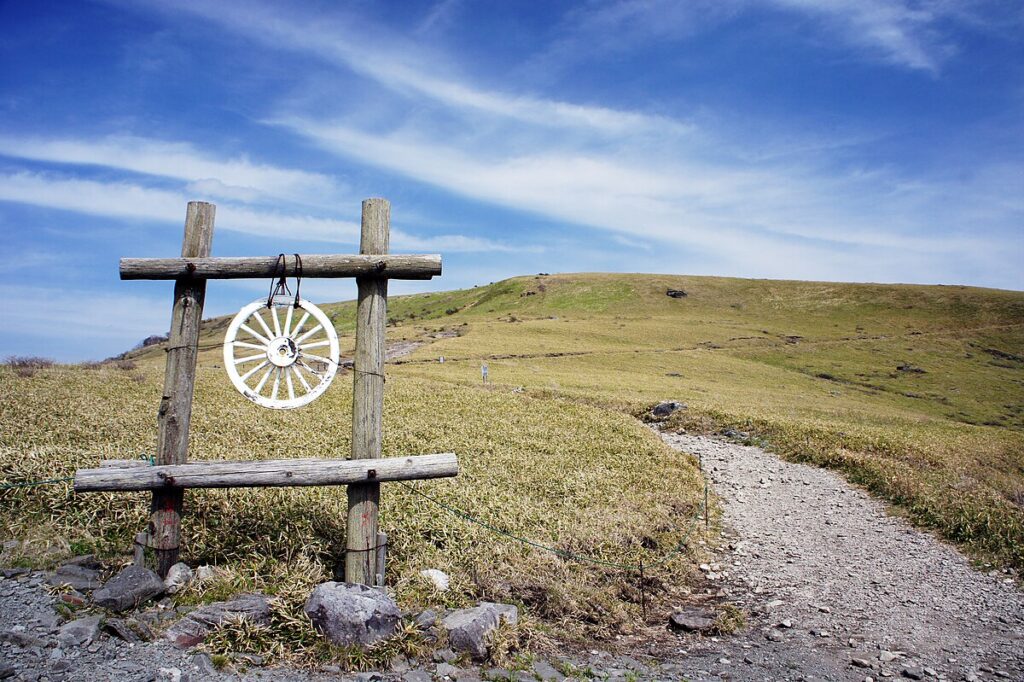
Overview (History, Features, and Attractions) Kurumayama Kogen is a highland resort in Chino City, Nagano Prefecture. It stretches from the base of Mount Kuruma (approximately 1,925m above sea level) to its summit. From here, you can enjoy 360-degree views of the majestic Yatsugatake mountain range, as well as Mount Fuji, the Central Alps, and the Southern Alps on clear days. -
Oyamazaki Villa Museum of Art (Oyamazaki Town, Kyoto Prefecture)
Overview (History, Features, and Attractions) The Oyamazaki Villa Museum of Art is located on a small hill in Oyamazaki Town, between Kyoto and Osaka. Originally a modern-era villa (mountain villa), it has been renovated and preserved and is open to the public as an exhibition space integrated with the surrounding gardens. As such, the museum is known for its... -
Takeo Shrine (Takeo City, Saga Prefecture)
Overview (History, Features, and Attractions) Takeo Shrine is a historic shrine located in Takeo City, Saga Prefecture, and has long been beloved as a shrine connected to local faith. Its main attractions are its spacious grounds and the ancient camphor tree (commonly known as the Great Camphor Tree of Takeo), a giant tree said to be "a tree inhabited by gods.". -
Clouds Above the Hill Museum (Matsuyama City, Ehime Prefecture)
Overview (History, Features, and Attractions) The Saka no Ue no Kumo Museum is a museum that offers an easy-to-understand look at the history of Meiji Japan, focusing on the world of Ryotaro Shiba's novel "Saka no Ue no Kumo" and the Meiji-era figures from Matsuyama (Akiyama Yoshifuru, Akiyama Saneyuki, and Masaoka Shiki). Opened in the Heisei era,...