-

Izu Highlands (Ito City, Shizuoka Prefecture)
Izukogen (Ito City, Shizuoka Prefecture) — Overview (History, Features, and Attractions) Izukogen is a highland area in the eastern part of Ito City, Shizuoka Prefecture. It offers a warm climate and natural scenery overlooking Sagami Bay, and is a popular tourist destination dotted with art, museums, and unique cafes and inns. Originally developed as a resort area for vacation homes and health clubs... -
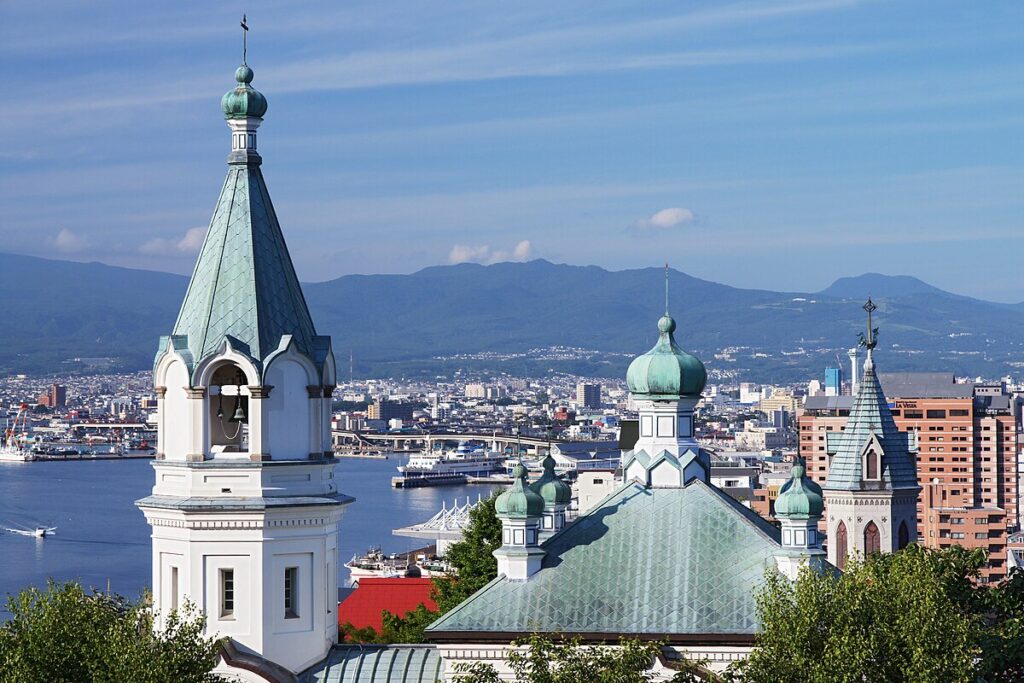
Hakodate Orthodox Church (Hakodate, Hokkaido)
Overview (History, Features, and Attractions): Hakodate Orthodox Church is a Russian Orthodox church located in the Motomachi district of Hakodate. Following in the footsteps of churches founded during the Meiji period when Russian Orthodoxy was introduced to Hakodate, an open port city, the church's architecture and worship space exude an exotic atmosphere amid the Western-style port town atmosphere. -
National Diet Building (Chiyoda Ward, Tokyo)
Overview (History, Features, and Attractions) The National Diet Building, located in Nagatacho, Chiyoda Ward, Tokyo, is the central facility of Japan's legislative branch. Its official name is "Kokkīgijido." The current building was constructed between the end of the Taisho period and the beginning of the Showa period, and was completed in 1936 (Showa 11). Its imposing stone exterior and central tower (approximately 65m high)... -
Kanemori Red Brick Warehouse (Hakodate, Hokkaido)
Overview (History, Features, and Attractions) The Kanemori Red Brick Warehouse is a group of commercial facilities that utilize the historic red brick buildings that line the bay area of Hakodate, Hokkaido. The red brick buildings, originally built as warehouses for port logistics, have been preserved and renovated to house shops, cafes, restaurants, and galleries. -
Ondo Strait (Kure City, Hiroshima Prefecture)
Overview (History, Features, and Attractions) Ondo Strait is a narrow strait in Kure City, Hiroshima Prefecture, and is one of the important waterways connecting the islands of the Seto Inland Sea with the mainland. It has long been used as a key point for ship navigation, and Kure developed as a naval base after the Meiji period, making Ondo Strait a key maritime... -
Shibuya Center Street (Shibuya Ward, Tokyo)
Overview (History, Features, and Attractions): Shibuya Center Gai is a bustling shopping district for young people that stretches from Shibuya Station in Shibuya Ward, Tokyo, toward Dogenzaka. Originating as a postwar black market and street-side shopping district, it rapidly developed from the 1970s to the 1990s as a center for fashion, music, and subculture. -
Nobeoka Castle (Nobeoka City, Miyazaki Prefecture)
[Overview (History, Features, and Attractions)] Nobeoka Castle (Nobeoka Castle Ruins) is a castle site located on a small hill (Castle Mountain) in the center of Nobeoka City, Miyazaki Prefecture. It is now a historic park with an attractive location overlooking the city. Construction of the castle began between the end of the Sengoku period and the early Edo period, and it was subsequently developed as a base for regional control... -
Mount Kanpu (Oga City, Akita Prefecture)
Mt. Kanpu (Oga City, Akita Prefecture) — Overview (History, Features, and Attractions) Mt. Kanpu is a scenic spot located almost in the center of the Oga Peninsula in Akita Prefecture, offering a panoramic view of the ocean and the undulating peninsula. Historically, it has long been known as a lookout point for the region and has served as a landmark for local sailing ships and fishing vessels. -
Kakitagawa Park (Shimizu Town, Sunto District, Shizuoka Prefecture)
Overview (History, Features, and Attractions) Kakitagawa Park (Shimizu Town, Sunto District, Shizuoka Prefecture) is a park developed around the Kakitagawa Springs, where underground water from Mount Fuji springs forth. The spring water is characterized by its high transparency and cold, clear flow. The clear streams, formed by the abundant underground water, support the local ecosystem... -
Tower of the Sun (Suita City, Osaka Prefecture)
Overview (History, Features, and Attractions) The Tower of the Sun is a monument created by artist Taro Okamoto as a symbol of the 1970 World Exposition (commonly known as Expo '70, Osaka Expo). Located in Expo Commemoration Park in Suita City, it stands approximately 70 meters tall...
| Discover Japan - Japan Regional Guide & Travel Information