Tourist attractions--archive--
-

Busena Marine Park (Nago City, Okinawa Prefecture)
Overview (History, Features, and Attractions) Busena Marine Park is an underwater tourist facility located at Cape Busena in Nago City, in the northern part of Okinawa's main island. Its greatest attraction is the opportunity to observe the beautiful coral reefs and tropical fish up close. It also features an underwater observation tower where you can enjoy the underwater scenery without having to enter the water, a glass-bottom boat, and... -
Lake Ezu (Kumamoto City, Kumamoto Prefecture)
Overview (History, Features, and Attractions) Lake Ezuko is one of the largest freshwater lakes in Kumamoto City (a group of wetlands and bodies of water including rivers and springs), located in the eastern part of the city. Originally formed from lowland water bodies formed by the flow of the Shirakawa River and underground water, it has become a rich aquatic environment thanks to its connection to springs and rivers. -
Nijigen no Mori (Awaji City, Hyogo Prefecture)
Overview (History, Features, and Attractions) Nijigen no Mori is an outdoor theme park located in Awaji City (Awaji Island), Hyogo Prefecture. It offers interactive attractions based on popular intellectual property (IP) from anime, manga, special effects, and other genres. It was established in the 2010s as part of a tourism promotion initiative on Awaji Island. -
Soma Nomaoi (Soma City, Fukushima Prefecture)
Overview (History, Features, and Attractions) The Soma Nomaoi is a traditional festival held annually in late July in Soma City, Fukushima Prefecture. It features warriors in armor riding horses. The festival dates back to the Heian and Kamakura periods and is a form of military training for samurai and Nomaoi... -
Fukui Castle (Fukui City, Fukui Prefecture)
Overview (History, Features, and Attractions) Fukui Castle (Echizen Fukui Castle) is the remains of an Edo period castle located in the center of Fukui City, Fukui Prefecture. It was developed as the headquarters of the Echizen Fukui Domain (Fukui Domain) established after the Battle of Sekigahara, and the domain lord's residence, as well as large stone walls and moats, were constructed. Much of the castle grounds have now been lost... -
Tsukishima Monja Street (Tsukishima, Chuo Ward, Tokyo)
Overview (History, Features, and Attractions) Tsukishima Monja Street is the nickname for a street lined with monjayaki restaurants in Tsukishima, Chuo Ward, Tokyo. Tsukishima was originally a downtown area developed as reclaimed land. During the postwar reconstruction period, monjayaki became popular as a taste for the common people, and gradually became a specialty dish. -
Roppongi Midtown (Minato Ward, Tokyo)
Overview (History, Features, and Attractions) Roppongi Midtown (Tokyo Midtown, located at 9-7-1 Akasaka, Minato-ku, Tokyo) is a large-scale complex that opened in 2007. Developed by Mitsui Fudosan and others, it includes offices, commercial facilities, a hotel, residences, a museum, and a green space in the city center (Hinokicho Park). -
Hōan-ji Temple (Ashikaga City, Tochigi Prefecture)
Overview (History, Features, and Attractions) Bannashi-ji Temple is an ancient temple in Ashikaga City, Tochigi Prefecture, known for its ties to the Ashikaga clan (a different branch from the Ashikaga clan that founded the Muromachi shogunate). In the Middle Ages, it served as the Ashikaga clan's residence, and as a result, the temple grounds still retain castle-like features such as earthworks and moats... -
Hoheikan (Sapporo, Hokkaido)
Hoheikan (Sapporo, Hokkaido) Overview (History, Features, and Appeal) Hoheikan is a historic Meiji-era Western-style building located in Nakajima Park in Sapporo. As a wooden Western-style building, it retains a design influenced by the Western architecture of the time, with wooden exterior decorations and interior halls, staircases, and intricately designed window frames... -
Yasaka Koshindo (Higashiyama Ward, Kyoto City, Kyoto Prefecture)
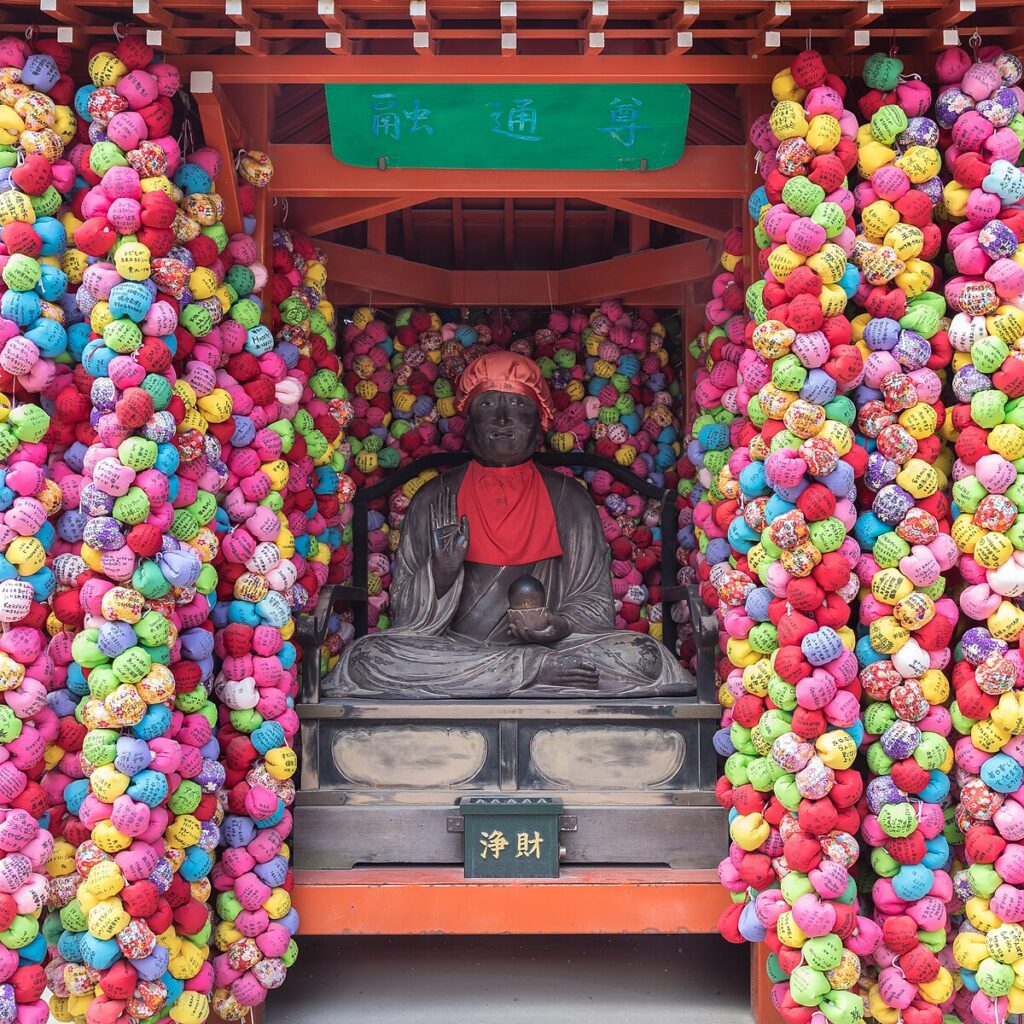
Yasaka Koshindo (Higashiyama Ward, Kyoto City, Kyoto Prefecture) — Overview (History, Features, and Attractions) Yasaka Koshindo is a small temple and shrine dedicated to the Koshin faith in the Higashiyama area of Kyoto. Koshin faith is a folk belief that originated in China and developed in Japan. Here, the deity Shomen Kongo (Blue-faced Vajra) is worshipped...