Nishi Honganji Temple (Shimogyo Ward, Kyoto City, Kyoto Prefecture) — Overview (History, Features, and Attractions)
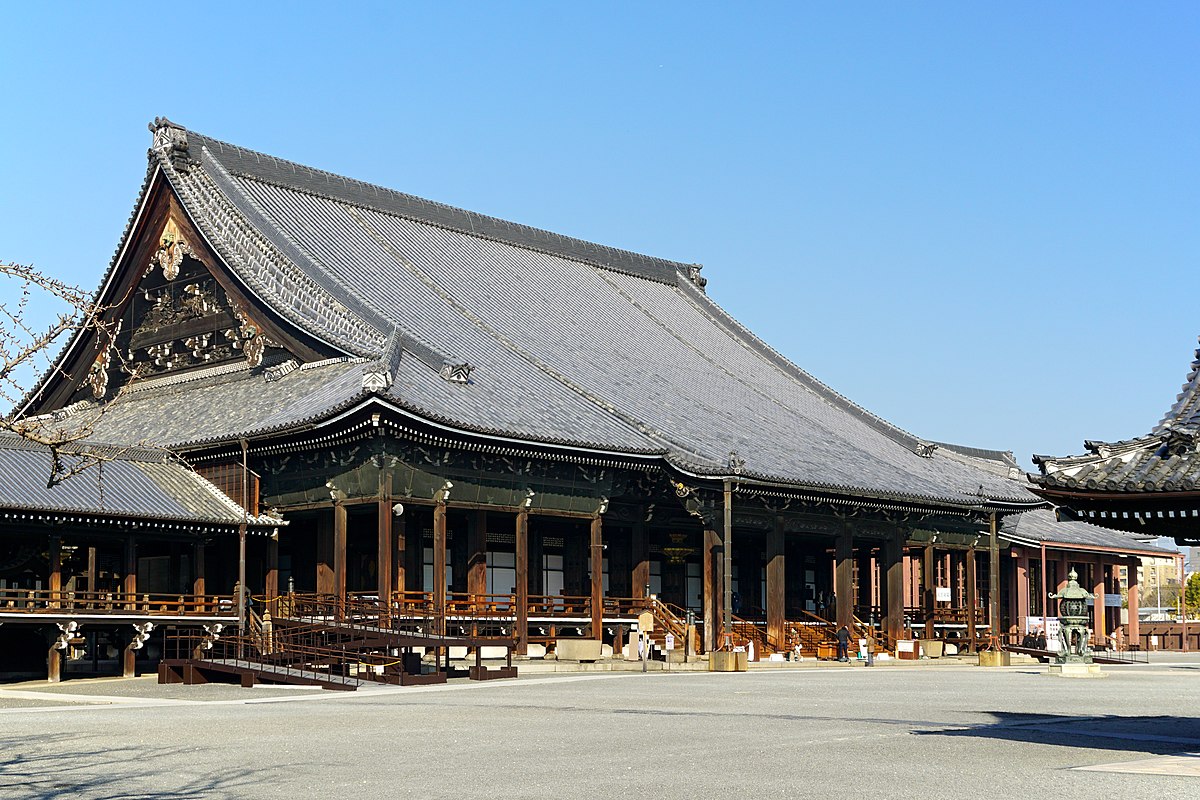
Nishi Honganji is a large temple located in Shimogyo Ward, Kyoto City, and is one of the head temples of the Jodo Shinshu Honganji sect. Its origins date back to Shinran (the founder of Jodo Shinshu), and the activities of Rennyo and others helped expand its base of believers during the Muromachi and Sengoku periods. The large-scale temple complex seen today was developed after the Edo period, and features magnificent wooden architecture and decorations, as well as numerous halls and pagodas designated as national treasures and important cultural properties. Despite being located in the heart of the city, the temple's major attractions include the tranquil space that unfolds upon entering, the size and well-preserved state of its historical buildings, and the opportunity to experience religious culture such as memorial services and gagaku music.
Highlights
– Goeido Hall and Amida Hall
The interior of the main hall is magnificent, and it is worth seeing just for the sheer size of the architecture and the techniques used in timber construction (there may be restrictions on viewing and photography inside the hall).
– Karamon Gate
The gate is adorned with gorgeous carvings and colors, and its gorgeous decorations are sure to catch your eye.
– Auxiliary buildings such as Hiunkaku
Although some of the buildings are only open to the public for a limited period of time, they still retain important designs that convey architectural beauty.
– The temple grounds' gardens, stone pavements, and corridors
Although it is located in the city center, it has a tranquil landscape that changes with the seasons, and the autumn foliage is particularly spectacular.
– Religious events, memorial services, and proclamations
You can experience Buddhist culture in depth through memorial services, joint worship, and listening to Buddhist chants, all of which are open to the public in advance (please check the opening dates and whether advance reservations are available).
Access (nearest station, transportation, etc.)
– Nearest station (walking distance)
It is about a 5-10 minute walk from JR Kyoto Station (Central Exit or Karasuma Exit). Access from Kyoto Station is the most convenient.
– City buses and subways
Access is also possible via Kyoto City Bus stops (surrounding routes) and the subway. Please check the latest schedules and routes for bus stop names and routes before boarding.
– Cars and parking
There is a lot of traffic around the temple grounds and parking is limited, so we recommend using public transportation. Taxis and tour buses can pick you up and drop you off nearby, but please follow directions when they are crowded.
– Bicycle and walking tours
It is a convenient base for sightseeing on foot or by bicycle from around Kyoto Station or Kawaramachi.
(*Please check the latest information on official websites and transportation companies in advance for transfer and timetable information.)
Estimated stay (estimated time required)
- Quickly look around the exterior and grounds: 30 to 45 minutes
– A leisurely stroll around the exterior of the main temples and gardens: 1 hour to 1 hour 30 minutes
- Including viewing of the hall, exhibitions, and attending memorial services: 1 hour 30 minutes to 2 hours or more (varies depending on whether the temple is open to the public or not)
If you are planning to include this in your sightseeing route, it is most efficient to visit from Kyoto Station to Toji Temple to Nishi Honganji Temple.
Nearby spots
– Kyoto Station Building and Kyoto Tower (shopping and views)
– Higashi Honganji Temple (within walking distance, also a Jodo Shinshu temple)
– Toji Temple (Kyoogokokuji Temple, Five-story Pagoda. Close to Kyoto Station)
– Shopping and gourmet zone around Shichijo and Karasuma
– Access to walking routes to Nijo Castle and Kiyomizu-dera Temple (on foot or in a short distance)
Things to be aware of (crowds, manners, seasonal precautions, etc.)
– Photography and viewing etiquette
Photography may be prohibited inside temples and certain buildings. Please follow the signs and instructions of staff. Please observe quietly and be mindful of not disturbing other visitors.
– Shoes/Clothing
When visiting indoors, there may be a place where you need to take off your shoes. It is convenient to wear shoes that are easy to take off. Temples are religious facilities, so it is best to avoid overly revealing clothing.
– Busy periods
It is expected to be crowded during the New Year holidays, the cherry blossom season in spring and the autumn foliage season, and on event days such as the Flower Festival and memorial services. In particular, there are many visitors during New Year's visits and Hoonko (hoon lectures), so there may be restrictions on viewing and long lines. It is a good idea to check the event schedule in advance.
– Check public information
Some buildings, such as Hiunkaku, may be open on limited days and require a fee to be admitted. Please check the official website or on-site information in advance for admission fees, opening hours, and whether there are any special openings.
– What to remember when visiting
Please refrain from eating, drinking, or talking loudly in front of the main hall, and do not disturb the worshippers or monks. If you are unsure about offering money or the proper etiquette for praying, please refer to the surroundings.
—
If needed, I can also create HTML formatting for Gutenberg headings (h2/h3) and paragraphs, or a sample article format with photo captions (that you can copy and paste). Which format would you like?