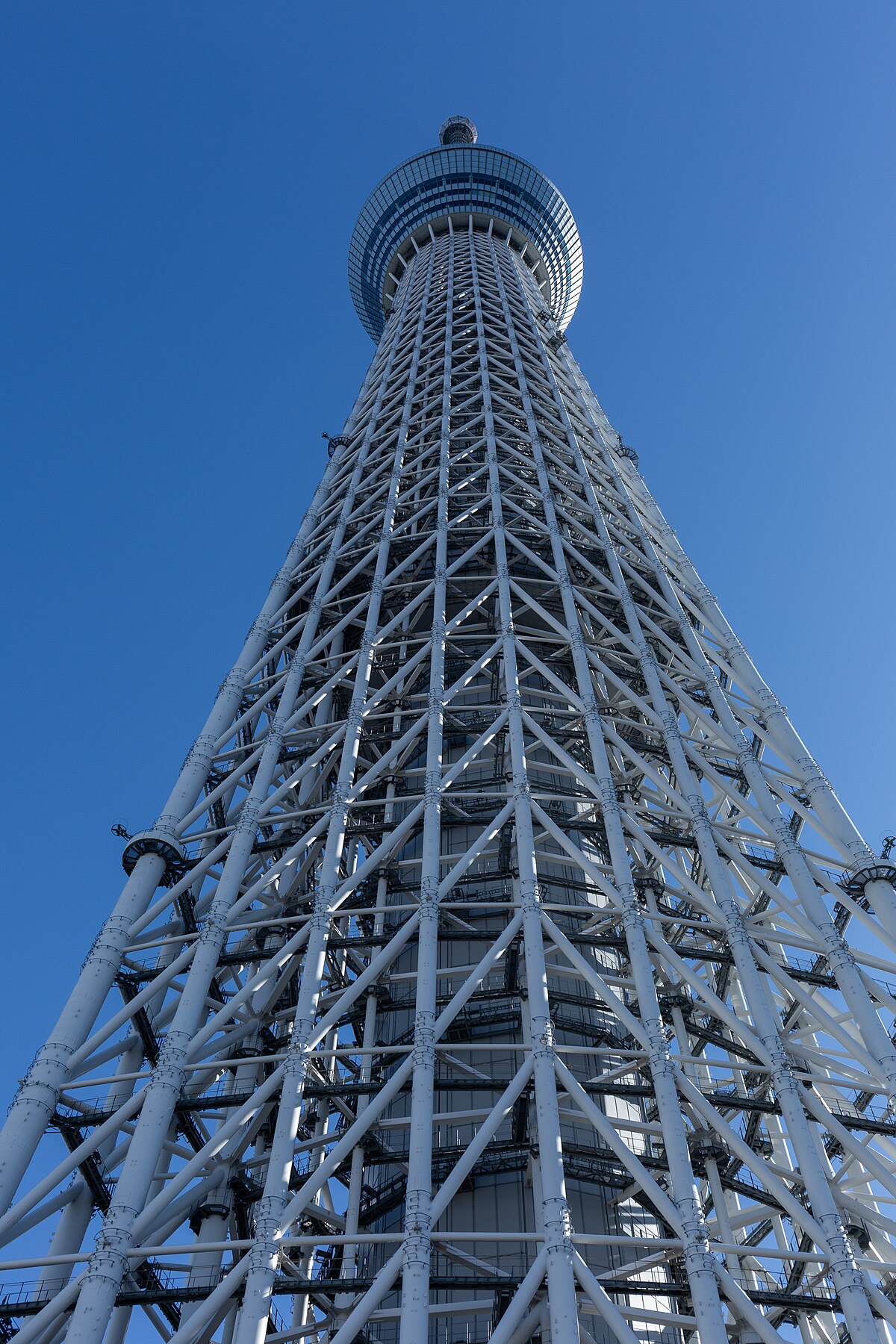
Tokyo Skytree (Sumida Ward, Tokyo)
Overview (history, characteristics, attractions)
Tokyo Skytree is a radio tower and observation facility that stands tall in Oshiage, Sumida Ward, Tokyo, and officially opened on May 22, 2012. At 634 meters tall (a pun on the word "musashi"), it is one of the tallest structures in Japan. In addition to its exterior design that combines a steel tower with traditional Japanese aesthetics, illuminations that change appearance between day and night, and broadcast signal transmission functions, it is a highly popular complex that also includes the tourist and commercial facility "Tokyo Solamachi," an aquarium, and a planetarium.
Structurally, the building employs seismic isolation and vibration control technology to prepare for earthquakes, and incorporates a design that applies the concept of the "shinbashira" (center pillar) found in traditional temples. From the observation deck, you can see views from the city center to the distant mountains, and on clear days you can enjoy a panoramic view of Mount Fuji and Tokyo Bay.
Highlights
- Observation Deck (Tembo Deck / approx. 350m above ground): A 360-degree panoramic view. Features include a glass floor, a cafe, and Sorakara Point (a great photo spot).
- Observation Corridor (Tembo Galleria / approx. 450m above ground): Enjoy the high-altitude view from the sloping corridor, like walking in the air. An irresistible experience for those who love heights.
- Night view and illumination: The tower is illuminated according to the season and events (the most popular colors are "iki" and "miyabi"). The view from dusk to night is especially recommended.
- Tokyo Solamachi: A shopping mall, restaurants, and cafes. Convenient for souvenir shopping and dining.
- Enjoy it as part of Sumida Ward's tourist attractions: The nearby Sumida Aquarium, Konica Minolta Planetarium, Sumida Park, and Asakusa can easily be incorporated into your sightseeing route.
- If the weather is good, you can enjoy a panoramic view of Mount Fuji, Tokyo Bay, the Sumida River, and the skyscrapers of central Tokyo.
Access (nearest station, transportation, etc.)
- Nearest station
- Tokyo Skytree Station (Tobu Skytree Line)...just a short walk from the ticket gate.
- Oshiage (Skytree-mae) Station (Keisei Oshiage Line/Toei Asakusa Line/Tokyo Metro Hanzomon Line/Tobu Skytree Line)...Access to Tokyo Solamachi via the underground passageway.
- Approximate distance from major stations
- From Tokyo Station: Approximately 25-35 minutes by train (depending on line and transfers).
- From Asakusa Station: Walk (approximately 15-20 minutes) or a short bus ride.
- By car: Paid parking is available in the area (there is also a parking lot within Tokyo Solamachi, but it may be full during busy times, so we recommend using public transportation).
- For official information (including the latest access and times), please check the Tokyo Skytree official website: https://www.tokyo-skytree.jp/
Estimated stay (estimated time required)
- Observation deck only: Approximately 1-2 hours including round trip travel time (please allow a little more time if you want to enjoy the view at your leisure).
- Observation deck + dining and shopping at Tokyo Solamachi: Approximately 2 to 4 hours.
- Sightseeing in the surrounding area (including Asakusa, Sumida River, Sumida Aquarium, etc.): Half-day to full-day course.
Nearby spots
- Tokyo Solamachi (Shopping and Gourmet)
- Sumida Aquarium (inside Tokyo Solamachi)
- Konica Minolta Planetarium (Planetarium in the Sky, inside Solamachi)
- Sumida Park (famous for its cherry blossoms and perfect for strolling along the Sumida River)
- Asakusa and Sensoji Temple (a downtown atmosphere lined with Japanese sweets and souvenir shops)
- Edo-Tokyo Museum (Exhibitions that teach about the history of Edo and Tokyo)
Things to be aware of (crowds, manners, seasonal precautions, etc.)
- congestion:
- It tends to get crowded on weekends, national holidays, consecutive holidays, and during the night view hours (especially in the evenings and at night), so you may have to wait for tickets and elevators. For a smoother experience, it is recommended to purchase tickets with a specified date and time or make reservations online in advance.
- Please check the official website for the latest information as there may be restrictions on admission to the observation deck or temporary closures.
- Weather and visibility:
- Visibility is poor on foggy, cloudy, or rainy days, and you may not be able to see Mount Fuji or other distant sights. If you want a good view, we recommend choosing a sunny day.
- At high altitudes, the wind can be strong and the temperature can feel cold, so please prepare appropriate clothing for the season.
- Manners:
- Please do not run on the observation deck and be considerate of those around you (such as by occupying the area for long periods of time or speaking loudly when taking photos).
- There are restrictions on bringing pets, drones, and the use of certain equipment. Be sure to check the rules in advance.
- Safety and Barrier-Free:
- There are facilities for wheelchair users and priority lanes, but if it gets crowded, you can ask the staff for guidance.
- With children:
- Be careful if your child is afraid of heights, such as glass floors. Strollers are allowed inside, but care must be taken when moving around when it is crowded.
For other up-to-date information (opening hours, ticket prices, event information, etc.), please check the Tokyo Skytree official website: https://www.tokyo-skytree.jp/
One example of how to enjoy it: After enjoying the view from the observation deck in the morning, have lunch at Solamachi, then stroll around Sumida Aquarium and Sumida Park, and return in the evening to watch the illuminations. This is a surefire plan.